 TR

In This Article
- Safety Is About How the Work Is Done
- Site Layout in the Initial Plan
- The Work Program and the Safety Assessment
- Defining Roles and Authority Clearly
- Linking Training to Daily Work
- Interaction Between Teams
- Organizing Materials and Equipment
- Changing Weather and Site Conditions
- Learning from Incidents and Observations
- Questions the Client Can Ask in a Follow-Up Meeting
- The ILO Source and the Project Context
- Ending the Daily Meeting with Open Items
Safety Is About How the Work Is Done
Describing site safety only in terms of personal protective equipment or inspection reports leaves out a significant part of the process. Work planning, the layout of the work area, the interaction of different teams and the flow of information are also part of safety management. Before an activity begins, the conditions need to be assessed and the people responsible identified. The same task can create different relationships when it is carried out in a different area or alongside other teams. For this reason, site organization is approached in a project-specific way that takes changing conditions into account.
This article is not a substitute for a site safety instruction or a risk assessment. Its purpose is to explain how the client and the project team can treat safety management together with day-to-day decisions. Work methods, the necessary measures and inspection processes are established by competent specialists according to the conditions of the specific project. A general article should not offer a single implementation recipe for every construction site. From a management perspective, what matters is being able to see how these specialist assessments are reflected in the work program and in daily site communication.
Site Layout in the Initial Plan
The layout of a construction site affects how teams and materials will move. Entrances, storage areas, temporary facilities and work points are considered together. Using the same area for different purposes can create a need for coordination between teams. The site plan should not remain a drawing made on the first day. As the works progress, access and working relationships may change. These changes need to be carried over into the relevant safety assessment and into daily planning.
At the kickoff meeting, the client can ask who will monitor the site layout and how it will be updated. On projects where several contractors work, responsibilities for shared areas should be clearly defined. One team organizing its own work point does not, on its own, ensure coordination across the whole site. Shared circulation areas and concurrent works are assessed together. Up-to-date information is passed on to the relevant parties. In this way, the site layout becomes not just a plan showing where materials are placed but a working tool that shows how daily activities relate to one another.
The Work Program and the Safety Assessment
Changes in the work program can affect the relationship between work areas and teams. Starting an activity earlier, or scheduling it in the same period as work in another area, can create a new need for coordination. That is why it is important to share planning decisions with the safety team in good time. The schedule is not read only in terms of quantities and durations. Which works will run at the same time and how they will affect each other are also examined. The relevant assessments are made according to project conditions.
Daily meetings cover the planned activities and the preparations they require. It becomes clear which conditions must be in place before a task can start. Owners and next steps are assigned for open items. Schedule pressure should not make safety decisions invisible. For the client, the useful approach is not to let these two subjects drift apart into separate reports. Planning work under suitable conditions is part of how site production is carried out and should be treated as a natural part of daily coordination.
Defining Roles and Authority Clearly
In safety management, the duties of the different teams need to be clear. It is determined who will assess which issue, who will provide information and who will coordinate. An open item may be assumed to be known by everyone while in fact no one owns it. This creates gaps in communication. Defining duties in writing and in clear terms makes the work easier to track. The structure of responsibilities is set up in line with the project scope and the relevant specialist assessments.
The contact points through which site workers can report problems should also be clear. The person making a report needs to know which step to follow. It is important that an observation reaches the person responsible and that the outcome is followed up. Writing a meeting note or creating a record does not by itself mean the issue has been resolved. What the assessment leads to on site is monitored. When reading a safety report, the client can ask not only how many records there are but also how open items are being handled and which decisions have been put into practice.
Linking Training to Daily Work
Briefings and training become easier to understand when they relate to the work people will actually do. Alongside a general presentation, explanations tailored to site and activity conditions are needed. Different teams may not have the same information needs. Different topics may be more relevant for someone who has just started than for a team moving to another area. The necessary training arrangements are set up by competent responsible persons. The aim is not simply to produce an attendance record but to connect the information to daily practice.
The form of communication should be chosen so that workers can understand it. The language, examples and visual explanations used can be adapted to site conditions. Repeating an instruction that was not understood does not always solve the problem. It is important that the person concerned can raise questions and receive explanations. For the client, assessing training records together with practice on site provides a more complete picture. Information being delivered is not the same as it being understood and reflected in daily work. This difference shows why continuous communication is necessary in safety management.
Interaction Between Teams
Several work packages may be carried out on a construction site in the same time frame. While each team has a plan for its own work, the relationship with other activities can be overlooked. For this reason, area use and work sequence are discussed together. One team moving materials or another team carrying out preparatory work can affect shared access. Coordination is not just aligning the start times of activities. It means ensuring that everyone has the same up-to-date information about work areas and how the activities affect one another.
When concurrent works change, the relevant assessments are updated. The period for which temporary arrangements apply is stated. Continuing to use an outdated plan on site can create uncertainty. Decisions concerning shared areas need to be communicated to all teams involved. The client can follow the output of daily coordination meetings through a short task list. It becomes clear which issue awaits clarification and which preparation is to be completed. Such an arrangement ties safety to project management as a whole rather than leaving it solely to one specialist’s report.
Organizing Materials and Equipment
The flow of materials on site affects the layout of work areas. Movement between delivery, storage and installation points is planned. The necessary assessments regarding the use of equipment are made by the relevant specialists. How a material is identified and when it will be used matter as much as where it is located. A change in the program can change storage or access needs. That is why procurement and site logistics information should feed into daily coordination. A product arriving on site does not necessarily mean that all the preparations for it are complete.
Regular material tracking makes it easier to understand how different teams use the same area. Open items and temporary arrangements are linked to the people responsible. A useful question for the client is how logistics decisions are carried over into the work area plan. Treating the movement of materials and equipment as a separate procurement matter can hide its impact on site. The link between the safety assessment and the daily layout should be maintained. This article does not describe how to operate any particular machine; it emphasizes that organization must be addressed together with project conditions.
Changing Weather and Site Conditions
Site conditions do not stay the same throughout a project. Weather, access and the physical condition of the work area can change. The effect of these changes on planned activities is assessed by the relevant teams. It should not be assumed that work previously done in the same area will be carried out under the same conditions today. Current observation and specialist assessment are important. The client can ask what information the assumptions in the program are based on and how decisions will be updated when conditions change.
Site information is fed into meetings regularly. If the use of an area has changed or a new constraint has emerged, the relevant parties are informed. Current decisions need to be reflected in the work plan. Simply adding a note to a report does not mean the arrangement on the ground has changed. A person is assigned to follow up and the next step is explained. This approach shows that safety management is a living assessment process rather than a fixed document. The information link between project progress and the actual state of the site must be maintained at all times.
Learning from Incidents and Observations
Site observations can provide data for improving safety management. When an incident or an open item is addressed, not only the visible outcome but also the conditions that influenced it are examined. Processes such as communication, planning or site layout may be included in the assessment. The necessary steps are determined through review by the relevant specialists. Attributing the issue to a single person alone can cause other causes to be missed. The aim is to deal with the current issue appropriately and to learn so that similar situations do not recur.
The effect of the decisions taken should be monitored. Even if a task appears closed, the expected result may not have materialized in practice. Records are linked to the relevant work and area. Lessons learned are shared with other teams as appropriate. Rather than copying the same solution directly to another project, the questions that should be asked early can be passed on. The client can judge safety management not by the number of reports but by this structure of learning and follow-up. Sharing information openly and in good time supports the quality of daily coordination.
Questions the Client Can Ask in a Follow-Up Meeting
In a progress meeting, the client can ask which activities will share the same area, which preparations are still open and which decisions are pending. Whether the site layout is up to date is discussed. How briefings and training are linked to new works is assessed. Instead of a general statement such as “the safety situation is good,” the open items and the decisions implemented should be understood. In this way, the client’s follow-up is not limited to receiving a report. It becomes a meeting in which the different areas of project management inform one another.
In follow-up, records related to the management of the work can be given priority over workers’ personal information or unnecessary detail. Where the issue is and which activity it relates to are stated. The person responsible and the next step are defined. Decisions taken at the end of the meeting are communicated to the relevant teams. This arrangement helps to narrow the gap between daily site information and management decisions. For safety assessments to be reflected in practice, it is important that everyone understands the same open item and the preparation expected.
The ILO Source and the Project Context
The International Labour Organization’s code of practice on safety and health in construction is a reference source that addresses the subject together with planning, work organization and the duties of the parties involved. The detailed instructions of the source have not been reproduced here. It has been used as a general framework that serves as a reminder that specialist assessment must be carried out according to project conditions. The link to the source is provided at the end of the article. Current site practices should be based on the assessment of the relevant professional teams and the project’s own requirements.
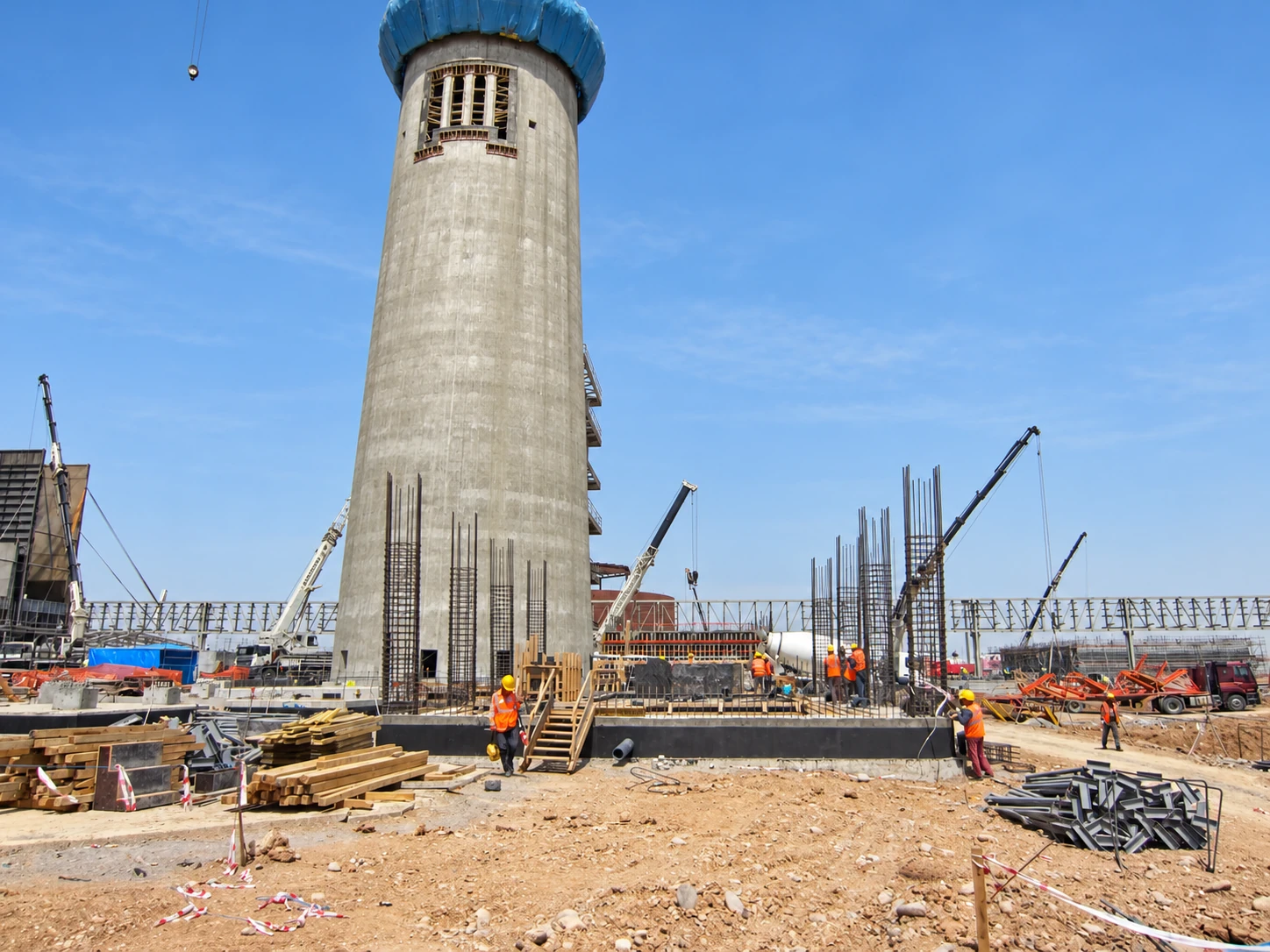
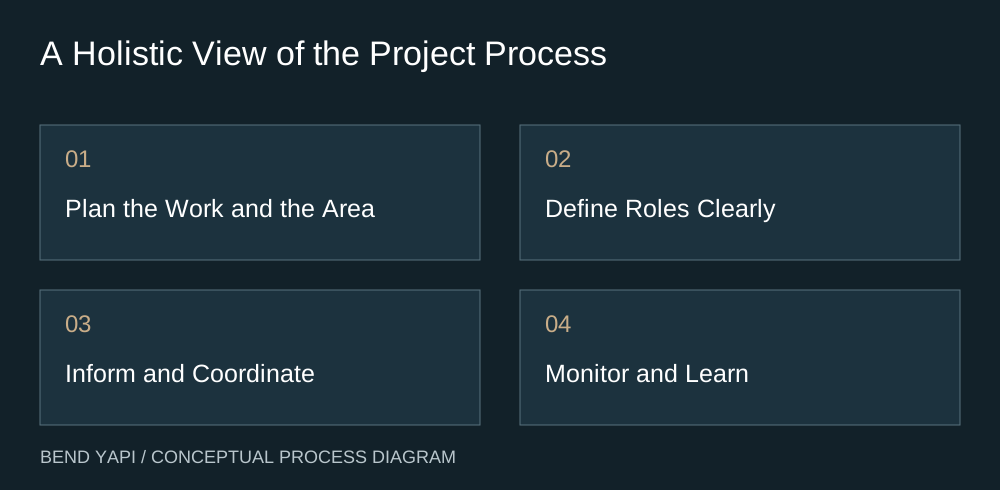
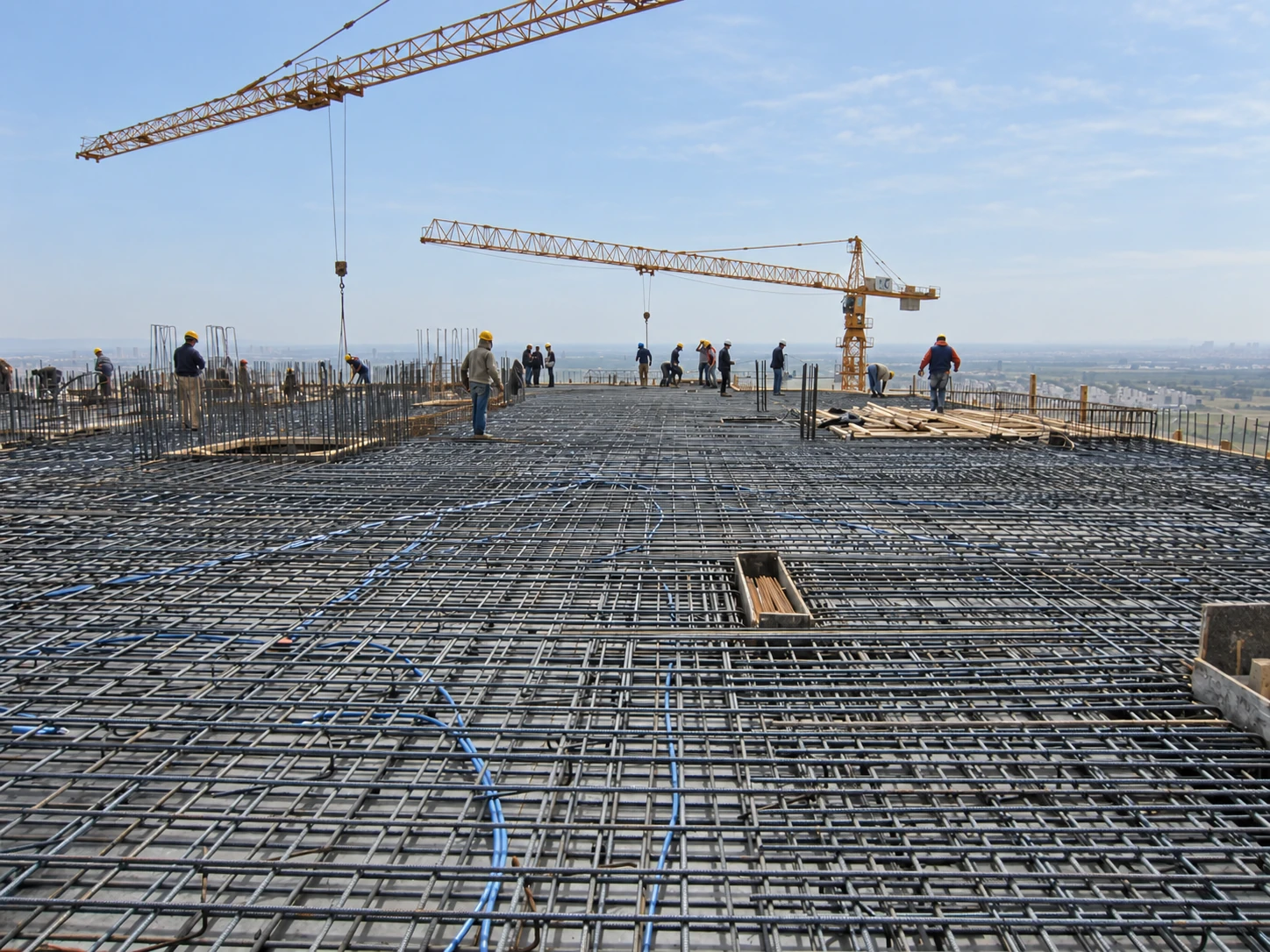
Site images from the Bend Yapı archive provide visual context showing that different activities can take place on the same construction site. The photographs are not used as evidence that all safety conditions are compliant. It is not right to draw firm conclusions about a site’s safety management from a single image. The focus of this article is communication between work planning and daily practice. When duties, preparations and changing conditions are visible, the client can ask clearer questions about the process and the teams can work from shared information.
Another benefit of this information structure appears when new teams join the site. An incoming team needs to know the decisions already taken and the current area boundaries. Links can be established between the kickoff meeting, the daily program and the relevant records. As a result, site organization does not depend solely on the memory of those who have worked there for a long time. The project’s changing workforce has access to the same up-to-date information. By deciding which topic will be passed on at which stage, the client and the coordination team can manage this transition more clearly.
Ending the Daily Meeting with Open Items
At the end of the daily site meeting, it should be clear who will complete which preparation. Instead of a general reminder, tasks linked to a specific area and activity can be written down. An item awaiting assessment is passed to the person responsible. The status of these tasks is discussed at the next meeting. This way, the same uncertainty is not raised again every day. The client and the coordination team can regularly track the closing of open items. This arrangement does not replace specialist assessment; it helps the decisions taken to be reflected in practice. Safety communication covers not only passing on information but also following up on the outcome.