
 TR
In This Article
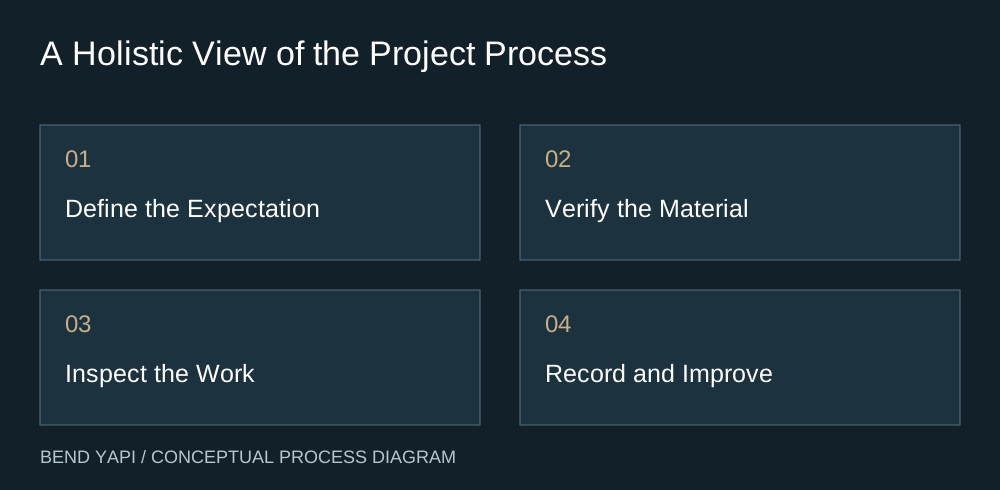
- Not Leaving Quality to the Final Inspection
- Linking Needs to Acceptance Expectations
- Material Selection Is an Exercise in Comparison
- Identifying the Delivered Product
- Storage Conditions Are Part of the Quality Chain
- Pre-Construction Readiness Checks
- Inspection During Work and at Closeout
- Understanding the Cause of a Nonconformity
- Document Control and Traceability
- A Brief Look at Quality Management Principles
- Carrying Site Knowledge Forward to the Next Job
- An Example Material Substitution Discussion
- Building a Checklist Around Its Purpose
Not Leaving Quality to the Final Inspection
Quality in construction is not limited to looking for defects once the work is complete. Defining the need correctly, selecting suitable materials, planning the work and tracking inspection results are all parts of the same process. A surface that looks smooth is valuable, but work that is later covered up also matters to the structure. Quality management addresses both the visible and the hidden work against defined expectations. For the client, the goal is not simply to see an inspection report but to understand under what conditions the work was produced.
Quality expectations should be clearly defined for each project. General phrases such as "first-class workmanship" can mean different things to different people. The technical specification, approved drawings and a defined inspection regime provide a common basis for evaluation. The same inspection method may not be used for every work item. The relevant technical teams determine the required methods and acceptance criteria. Rather than prescribing tests for a particular material or structure, this article examines how the quality process can be made visible and traceable between the client and the construction team.
Linking Needs to Acceptance Expectations
For a piece of work to be considered good quality, it must be clear which need it is meant to meet. A residential finish, an industrial facility floor and the shared area of a school may face different conditions of use. Material and construction decisions are evaluated in light of these conditions. Discussing acceptance expectations at the outset can reduce the risk of different interpretations of the same work at handover. Appearance, technical compliance and functional fit can be treated as separate questions. In this way, quality stops being an assessment based purely on personal taste.
A link should be established between the result the client expects and the properties the technical team will inspect. A sample or mock-up area can help clarify visual expectations, while technical properties are defined through the relevant documents and evaluations. Approved decisions must be accurately communicated to the construction team. If a detail agreed in a meeting has not been incorporated into the drawings or the product list, the site may end up working to a different expectation. The first step of the quality process is turning decisions into clear, up-to-date information.
Material Selection Is an Exercise in Comparison
Choosing a material based only on its product name or total price can be incomplete. The area where the product will perform, its conditions of use and its relationship to other elements are examined. The technical team compares suitable alternatives against the project requirements. The fact that a product has been used on another project does not, on its own, show that it is suitable for a new use. Different installation conditions can also affect the outcome for the same product. During tender discussions, the client can ask why a material is being proposed and which expectation it meets.
When an alternative material is proposed, the evaluation method should be clear. A substitution may affect not only the purchase price but also installation time, maintenance needs or other systems. The necessary documents are reviewed by the relevant specialists. If approval is given, the decision is recorded and the affected information is updated. Care is taken to avoid different teams interpreting a verbal approval in different ways. When material selection follows such a process, the commercial decision and technical suitability are addressed in the same evaluation.
Identifying the Delivered Product
When a product arrives on site, its relationship to the material that was ordered and approved needs to be established. The necessary identification and document checks are carried out according to the project's procedures. It is determined which work package the material has arrived for and where it will be used. When there are many products on site, similar appearances can cause confusion. An identification and recording system helps the right product reach the right location. Having been received does not necessarily mean a product is ready for use under all its conditions.
When a delivery is found to be nonconforming or to require clarification, the situation is recorded. It may be necessary not to release the material for use until the relevant evaluation has been made. The person responsible for the decision and the next step are defined, so the site team knows how the uncertainty will be resolved. Communication with the supplier can also be based on the same record. Material acceptance should be seen not as the last step of procurement but as an initial inspection that provides data for construction quality.
Storage Conditions Are Part of the Quality Chain
Purchasing the right product does not eliminate the effect of unsuitable storage conditions. The storage and protection arrangements required by the properties of each material are evaluated. Site layout, handling movements and the sequence of use are linked to these arrangements. The product's identification is maintained during storage. A material that sits for a long time or is moved by different teams may need to be checked again. For the client, it is useful for quality tracking to cover the period from delivery to site through to installation.
Keeping the storage area orderly is not just an aesthetic expectation. It provides information for access to materials, stock control and correct use, and makes it possible to see which product was dispatched to which location. When the construction program changes, the procurement and storage plan is reviewed alongside it. This helps reduce the impact of unnecessary stockpiling or poorly timed deliveries. Quality management considers the product's entire journey on site; it does not treat procurement decisions separately from site logistics.
Pre-Construction Readiness Checks
The conditions required before a work item can start can be defined in advance. These may include having the current drawing available, the preceding work being completed to the necessary stage and the relevant material being ready. The technical team defines inspection points according to the project. Starting work before preparations are adequate can create a need for rework at a later stage. The purpose of inspection is not only to catch errors; it is to ensure the team starts work with the right information and suitable working conditions.
Open items identified during a readiness check can be turned into a task list. A responsible person and a target date are assigned for each item, and it becomes clear what the next team is waiting for. When the place of this check is defined in the work program, the time it requires is not perceived as an interruption that appears later. Quality and planning support each other. Proper preparation makes the progress of the work and its handoff to subsequent trades clearer. In this way, the inspection regime is not perceived as a separate activity outside the site work.
Inspection During Work and at Closeout
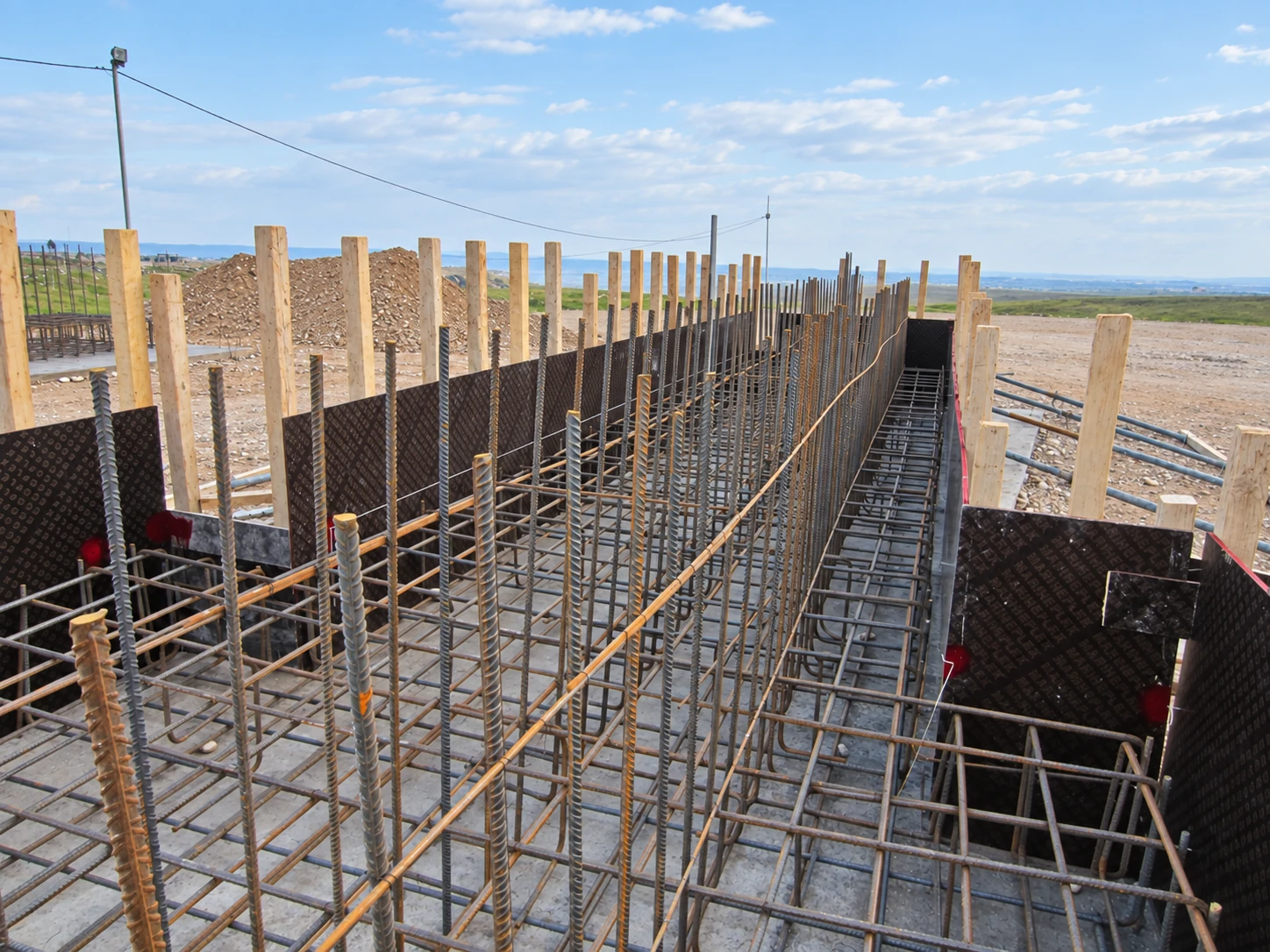
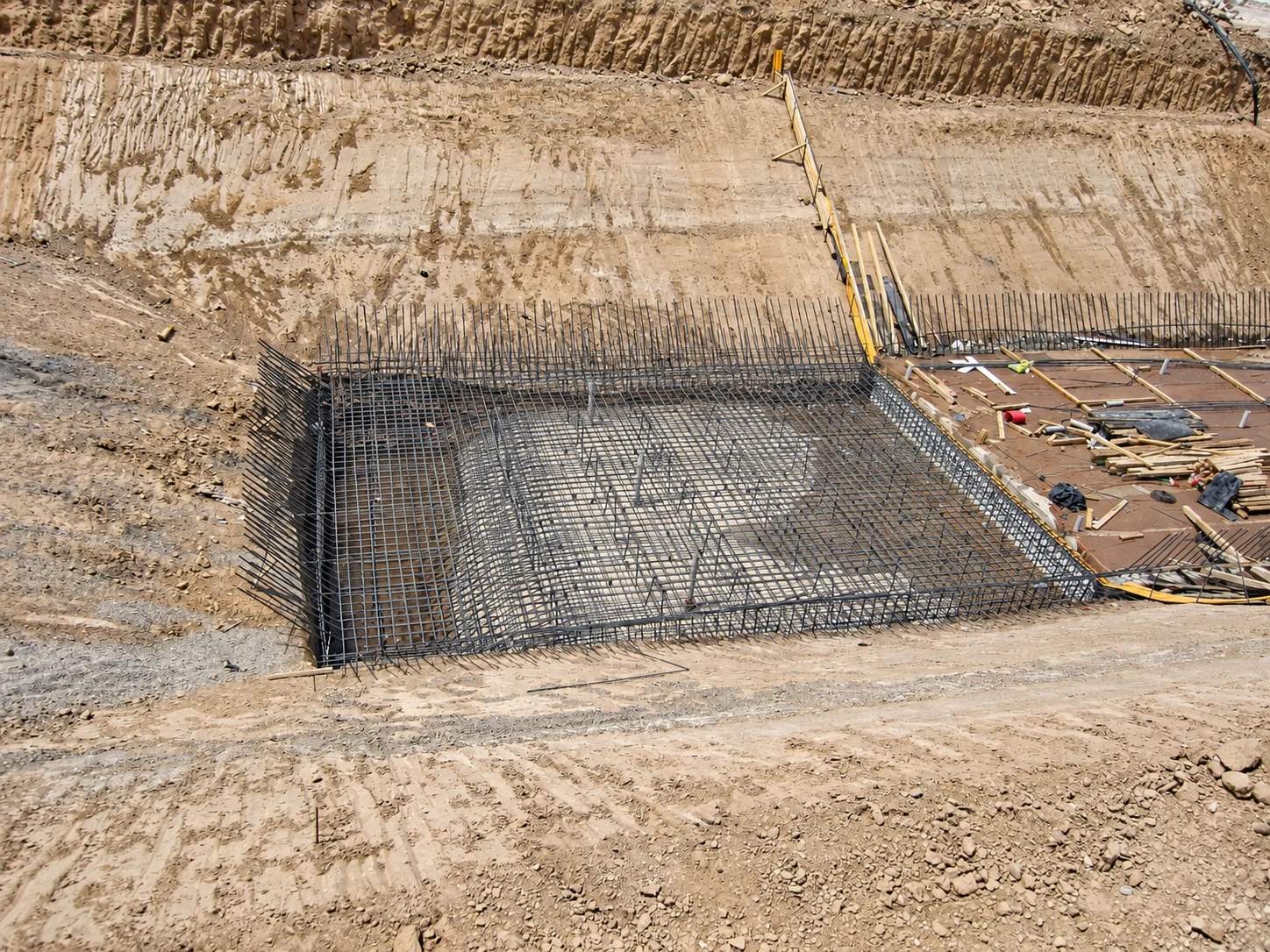
Some work items cannot be evaluated only on completion. Once subsequent work is finished, important details may no longer be visible. For this reason, the relevant technical teams determine at which stage each inspection will take place. Records taken during construction provide access to the history of the work. Different types of records, such as measurements, documents and photographs, can be used together. Not every record serves the same purpose; it should be clear which information supports which inspection.
The closeout inspection evaluates whether the work meets its defined expectations. Outstanding items are listed. If a correction has been made, the related closeout record is completed. Simply sending photographs or adding a general "completed" note may not always provide sufficient explanation. Records should be linked to the work and location that were inspected. If the conditions for moving to the next stage are clearly stated, handoffs between teams become more orderly. Linking quality inspection to the construction sequence makes it easier to track the work as a whole.
Understanding the Cause of a Nonconformity
When a problem is found, the first need is often to correct it. However, to prevent the same problem from recurring, it is also useful to evaluate its cause. An incorrect drawing, missing information, an unsuitable material or a mismatch in the work sequence may each call for different measures. Treating the issue purely as an individual mistake can hide other causes in the process. The relevant teams review the observation and the records together. The decision is made in line with the technical requirements of the project.
Correction and process improvement can be distinguished from each other. The first aims to bring the existing work into compliance; the second aims to prevent the same issue from arising in similar work. Where necessary, information distribution, inspection points or construction preparation are updated. Following up on the outcome is also important: even when a measure has been written down, it may not have been put into practice on site. A useful question for the client is not only whether the issue has been closed, but also what was learned and how that knowledge will be carried over to subsequent work.
Document Control and Traceability
Quality records should not turn into a large archive that cannot be used. Identifiers such as area, work package and document revision make information easier to access. Conflicting records on the same subject in different folders can make evaluation difficult. The relationship between current information and past records is kept clear. It should be evident who prepared a document and which work it relates to. The value of an archive lies less in the number of files than in its ability to answer the question at hand.
Information to be used by the operations team at handover is also prepared within this system. As-built drawings and the necessary technical records are handed over in an appropriate form. In maintenance or alteration work, the existing information can serve as a starting point, which is why linking data obtained during inspections to the correct area is important. The memory of the quality process does not serve only the construction period; it also provides access to information throughout the building's later life. Orderly records are one of the cornerstones of continuity between construction and handover.
A Brief Look at Quality Management Principles
ISO's description of the quality management principles brings together customer focus, leadership, engagement of people, process approach, improvement, evidence-based decision making and relationship management. This general framework is useful for recognizing that quality in construction cannot be explained by looking at the end product alone. No certificate renewal or new certification claim concerning Bend Yapı is being made here. The aim is to tie the idea of evaluating processes together to a publicly available source. The link to the source is provided at the end of the article.
At project level, this approach can take the form of clarifying expectations and supporting decisions with relevant data. It matters that teams know their responsibilities, that records are kept understandable and that lessons learned are carried forward into subsequent work. Holding a certificate is not the same as demonstrating that every work item has been done correctly, and this distinction should be maintained in quality communication. By asking which records and inspections were used to evaluate a specific piece of work, the client can turn general statements into clearer project information.
Carrying Site Knowledge Forward to the Next Job
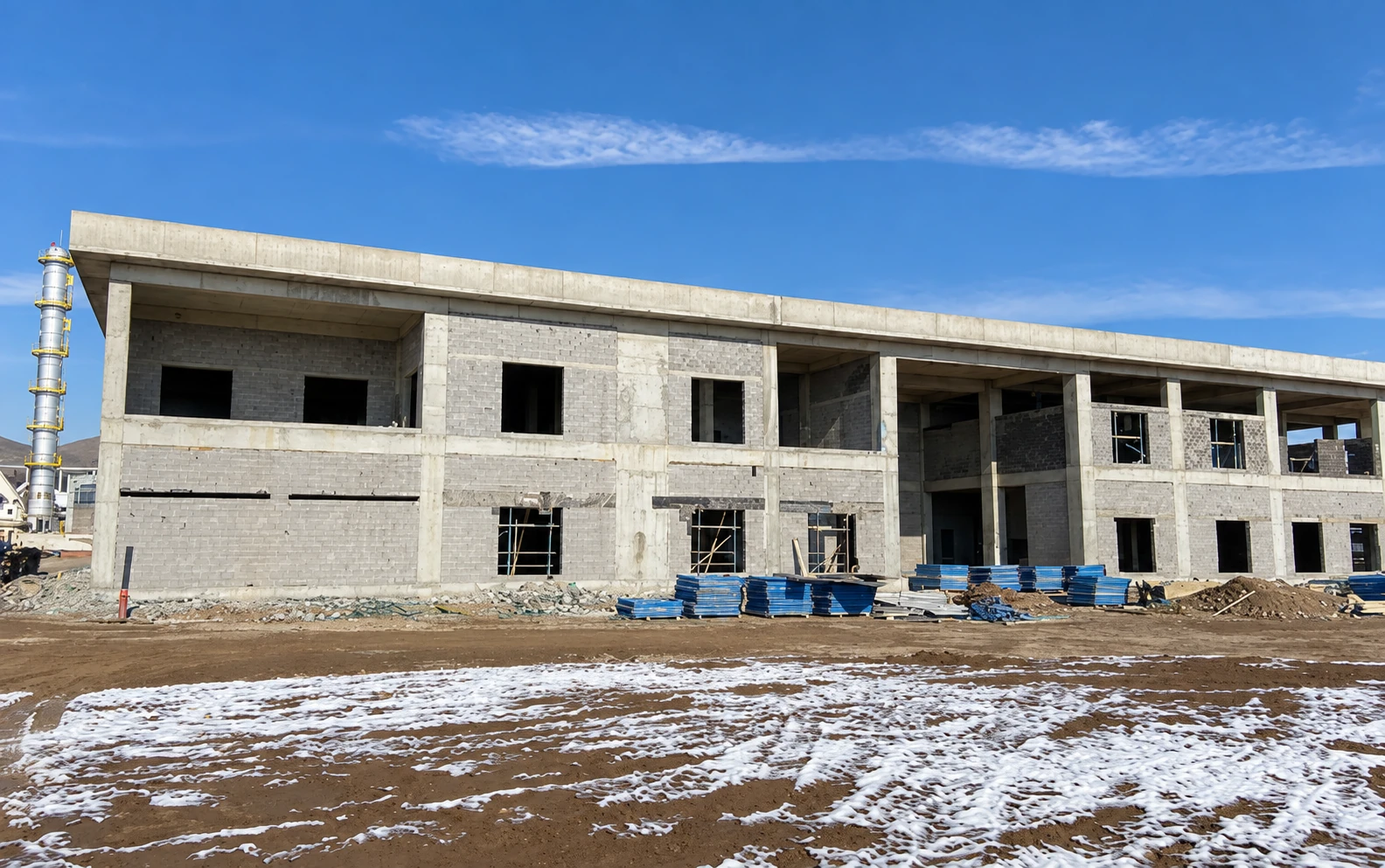
The different building types in Bend Yapı's archive are a reminder that quality topics can vary with conditions of use. The visible surface inspection of a school and the technical acceptance of an industrial work package are not evaluated with the same method. Even so, the need for accurate information, proper preparation and orderly records forms a common framework. The photographs used in this article show specific stages from the archive; on their own, they are not to be regarded as evidence of conformity for any work item.
At project closeout, experiences with the quality process can be discussed. It is recorded which inspections proved useful when done at the right time and which information should have been shared earlier. Rather than copying a solution directly into the next project, better starting questions are carried forward. This learning cycle supports the continuity of quality management. When every link in the chain from material selection to handover information is visible, the client can more clearly evaluate why and how the construction has progressed.
An Example Material Substitution Discussion
Suppose an alternative has been proposed for a finishing product. The discussion first explains why the alternative has come up: lead time, budget or functional needs can each lead to different evaluations. The technical team then examines how the product relates to the project expectations. The client sees the effects on appearance, installation and maintenance together. If a decision is made, the product information and related records are updated. This example does not belong to a specific project; it shows that a quality decision is broader than simply changing a product name.
By the end of the discussion, it should be clear which product the site team will use and under which approval. Documents relating to the previous product can be retained as historical records, while the current construction information is kept separate without causing confusion. In this way, a commercial decision is carried into construction in a clear manner.
Building a Checklist Around Its Purpose
A quality checklist does not have to be the same length on every project. The list is prepared according to the requirements of the work in question and the stage to be inspected. It should be clear which expectation each line evaluates. Unnecessary items can obscure important issues. The technical team determines the type of record required and the condition for moving to the next stage. When reading the inspection results, the client can review not only the ticked boxes but also the explanations of open items. A checklist is valuable to the extent that it helps decision making; the aim is not to create a mass of paperwork disconnected from the work itself.